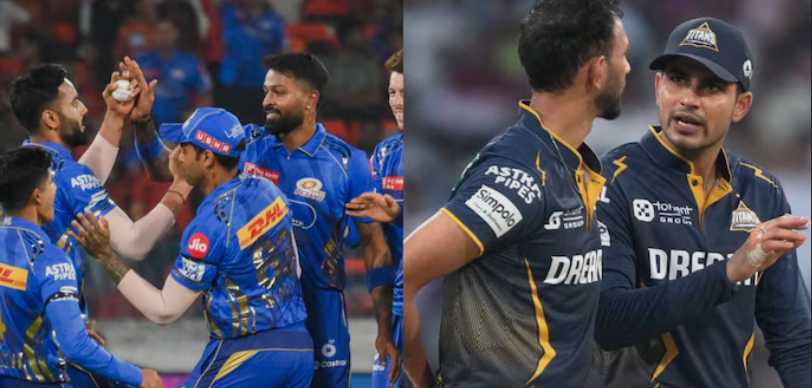
The clash between Mumbai Indians and Gujarat Titans has quickly developed into one of the most intriguing matchups in modern cricket. One side brings unmatched legacy, championship experience, and a winning culture built over years, while the other represents a fresh, fearless, and highly tactical approach to the game. Every encounter between them has delivered shifting momentum, pressure-filled overs, and standout individual performances. From explosive batting displays to disciplined bowling spells, both teams have pushed each other to adapt and improve. This timeline captures how their rivalry evolved, shaped by strategy, intensity, and moments that tested skill, temperament, and decision making under pressure in high stakes league cricket.
Recent Matches Table
Match Date
Venue Location
Batting First
First Innings Score
Second Innings Score
Match Winner
Victory Margin
May 26 2023
Ahmedabad
Gujarat Titans
233/3
171/10
Gujarat Titans
62 runs
March 24 2024
Ahmedabad
Gujarat Titans
168/6
162/9
Gujarat Titans
6 runs
Early Season 2025
Mumbai
Gujarat Titans
209/4
173/9
Gujarat Titans
36 runs
May 6 2025
Mumbai
Mumbai Indians
155/8
147/7
Gujarat Titans
3 wickets
Late May 2025
Mullanpur
Mumbai Indians
185/5
165/9
Mumbai Indians
20 runs
April 20 2026
Ahmedabad
Mumbai Indians
199/5
100/10
Mumbai Indians
99 runs
Team Statistics Summary Table
Team
Played
Won
Lost
Highest
Lowest
Win Percentage
Gujarat Titans
9
5
4
233
100
55.55
Mumbai Indians
9
4
5
218
152
44.44
Total Summary
9
9
9
233
100
100.00
Venue Ahmedabad
4
3
1
233
100
75.00
Venue Mumbai
4
1
3
218
152
25.00
Venue Mullanpur
1
1
0
185
165
100.00
Neutral Venues
1
1
0
185
165
100.00
Individual Batting Records Table
Batsman Name
Team Represented
Total Innings
Total Runs
Highest Score
Batting Average
Strike Rate
Shubman Gill
Gujarat Titans
9
356
129
44.50
149.57
Suryakumar Yadav
Mumbai Indians
8
298
103
42.57
158.51
Tilak Varma
Mumbai Indians
8
264
101
37.71
144.26
Wriddhiman Saha
Gujarat Titans
6
184
55
30.66
128.67
David Miller
Gujarat Titans
7
162
46
32.40
139.65
Rohit Sharma
Mumbai Indians
7
158
43
22.57
131.66
Ishan Kishan
Mumbai Indians
6
149
45
24.83
126.27
Individual Bowling Records Table
Bowler Name
Team Represented
Total Matches
Total Overs
Wickets Taken
Economy Rate
Best Bowling
Rashid Khan
Gujarat Titans
9
36.0
15
7.15
4/30
Mohit Sharma
Gujarat Titans
6
21.4
10
8.21
5/10
Jasprit Bumrah
Mumbai Indians
7
28.0
9
6.85
3/14
Piyush Chawla
Mumbai Indians
6
22.0
7
8.45
2/34
Noor Ahmad
Gujarat Titans
5
20.0
6
7.60
3/37
Akash Madhwal
Mumbai Indians
4
14.5
5
9.13
3/31
Ashwani Kumar
Mumbai Indians
1
4.0
4
6.00
4/24
Rivalry Origins and Early Expectations
The beginning of this clash brought together a highly decorated franchise and a newly formed but ambitious side that quickly changed the competitive balance of the league. One team carried years of winning culture, experienced leadership, and proven match winners, while the other arrived with fresh energy, fearless intent, and a strong tactical identity. From the very first meeting, the contrast in approach became clear. One side relied on structure and stability, while the other played with unpredictability and aggressive decision making. Fans immediately sensed that this matchup would not follow traditional patterns. Early discussions focused on how experience would handle innovation, and whether the newer side could withstand pressure in high intensity games. What followed was a series of closely watched encounters that shaped expectations for seasons ahead.
Match Phase
Dominant Style
Key Influence
Pressure Factor
Crowd Reaction
Initial Games
Balanced control
Senior batters
Moderate
High curiosity
Early Clashes
Aggressive starts
New top order
Rising
Loud engagement
Tactical Phase
Mixed strategy
Captains
High
Intense debate
Transition Stage
Adaptation focus
Bowlers
Very high
Emotional swings
First Encounter Turning Point
The first time these two sides met, it immediately set a competitive tone that neither could ignore. The match carried unexpected momentum shifts, with one side starting confidently while the other responded with calculated aggression. Early wickets created pressure, but middle order resistance kept the game balanced for longer than expected. The chase or defense became a psychological battle rather than just a technical one. Bowlers from both teams adjusted lengths repeatedly, trying to read pitch behavior and batter intent. What stood out most was the ability of the newer team to remain fearless even when the opposition had stronger names on paper. That first meeting became a reference point for all future games, influencing field setups, batting order decisions, and death over strategies.
Segment
Batting Impact
Bowling Impact
Key Moment
Result Influence
Powerplay
Fast scoring
Early wickets
Quick breakthrough
Balanced start
Middle overs
Stabilization
Spin control
Partnership build
Shift in momentum
Death overs
High intent
Variations used
Final over pressure
Tight finish
Final phase
Risk shots
Defensive plans
Last boundary push
Match decider
Early Momentum Shift Phase
After the initial clash, momentum began shifting in unexpected ways. The newer side started reading conditions better and adjusted their batting order to maximize powerplay advantage. Meanwhile, the experienced franchise faced challenges in maintaining consistency across matches. Fielding intensity and bowling discipline became deciding factors. In several games, small partnerships turned into match-winning stands, changing the direction of contests quickly. Tactical flexibility played a major role, especially when captains rotated bowlers strategically to break partnerships. Fans began noticing that no target or total felt completely safe when these teams met. Each match added another layer of pressure, making every mistake more costly than before.
Aspect
Team A Strength
Team B Strength
Difference Maker
Match Effect
Batting depth
Strong finishers
Top order aggression
Middle order stability
Balanced contests
Bowling attack
Experience
Pace variation
Spin control
Wicket clusters
Fielding unit
Consistent
Agile coverage
Catch efficiency
Saved runs
Strategy
Structured
Adaptive
Captain decisions
Outcome shifts
Tactical Adjustments and Strategy Evolution
As the rivalry progressed, both sides began evolving their strategies significantly. One team focused on strengthening their powerplay batting, aiming to set aggressive totals early. The other emphasized controlling middle overs through disciplined bowling rotations and tight field placements. Captains played a crucial role in reading pitch behavior and adjusting plans mid-game. Matchups became more specific, with bowlers targeting certain batters based on past weaknesses. Batting units also started planning innings more carefully, rather than relying purely on instinct. This phase marked a shift from raw aggression to calculated execution. Each match became a tactical battle, where small decisions had large consequences.
Strategy Area
Approach One
Approach Two
Effectiveness
Outcome Impact
Powerplay
Aggressive start
Controlled buildup
High
Early advantage
Middle overs
Rotate strike
Build pressure
Medium
Stability gain
Death overs
Big hitting
Variations
Very high
Match control
Field setup
Attack mindset
Defensive spread
Balanced
Tactical edge
Player Battles Defining the Rivalry
Individual contests began shaping match outcomes more than team totals. Top order batters faced high quality new ball bowling, often setting the tone for innings. Middle order players were tested under pressure when wickets fell in clusters. Bowlers on both sides developed specific plans for key opposition players, leading to intense one on one duels. Some batters struggled to dominate consistently, while others thrived under pressure situations. These matchups became highlights of every game, often deciding momentum swings in crucial overs. Fans closely followed these battles, treating them as mini contests within the larger match.
Player Role
Strength Displayed
Challenge Faced
Key Rival
Match Influence
Opener
Fast starts
Swing bowling
New ball attack
Set foundation
Middle order
Stability
Spin pressure
Field spread
Controlled innings
Finisher
Power hitting
Death bowling
Yorkers
Final acceleration
Bowler
Variation
Aggressive batting
Boundary hitters
Wicket impact
Pressure Moments and Close Finishes
Several encounters between these sides went down to the final overs, creating intense pressure situations for players and fans alike. Chasing targets under lights often tested nerves more than skills. Bowlers executed yorkers and slower deliveries while batters attempted calculated risks. In some matches, momentum changed multiple times within a single over, making outcomes unpredictable until the final ball. Field placements became crucial, with captains trying to cut boundaries while defending small margins. These moments defined the emotional core of the rivalry, turning ordinary league games into unforgettable contests.
Pressure Stage
Batting Response
Bowling Response
Key Situation
Result Type
Early chase
Cautious start
Tight lines
Low scoring
Balanced
Mid chase
Acceleration
Spin pressure
Partnership break
Unstable
Final overs
High risk
Yorkers
Boundary need
Thriller
Last ball
Maximum effort
Defensive setup
Winning shot
Decided
Fan Emotion and Stadium Energy
Crowd energy played a massive role in shaping the atmosphere whenever these teams met. Home advantage became significant, especially in stadiums with large and vocal crowds. Fans reacted strongly to every wicket, boundary, and controversial decision. Social media amplified emotions, turning individual performances into trending discussions. The rivalry also created divided fan bases, with neutral supporters often switching sides based on form and momentum. Stadium chants, celebrations, and pressure moments added another dimension to the matches, making them feel larger than just league fixtures.
Environment
Fan Reaction
Home Advantage
Media Buzz
Emotional Level
Stadium A
Loud support
Strong
High
Very intense
Stadium B
Balanced crowd
Moderate
High
Competitive
Neutral venue
Mixed reaction
Low
Medium
Balanced
Playoff stage
Maximum noise
Equal
Very high
Extreme
Rivalry Growth and Competitive Legacy
Over time, this fixture evolved into one of the most anticipated matchups in the league calendar. What started as a new encounter quickly became a benchmark for measuring consistency, adaptability, and pressure handling. Both teams learned from each other’s strengths and weaknesses, continuously refining their approach. Coaching staff played a bigger role in planning strategies, while players developed deeper understanding of conditions and opposition tendencies. The rivalry continues to influence team building and match preparation even today, leaving a lasting mark on modern league competition standards.
Growth Phase
Learning Focus
Key Improvement
Tactical Change
Long Term Impact
Early stage
Adaptation
Basic strategy
Trial approach
Foundation built
Mid phase
Consistency
Balanced play
Structured plans
Stability gained
Advanced stage
Precision
Execution
Data driven tactics
High performance
Current phase
Evolution
Innovation
Flexible systems
Legacy established
Conclusion
The journey between Mumbai Indians and Gujarat Titans reflects how quickly a modern cricket rivalry can grow in intensity and significance. Both sides have contributed to unforgettable matches filled with tactical battles, emotional swings, and match defining performances. Experience has often clashed with innovation, creating a balance that keeps fans engaged every season. As the contests continue, each game adds another layer to their shared history, influencing future strategies and team combinations. This rivalry stands as a clear example of how competitive cricket evolves, where adaptability, execution, and pressure handling ultimately define success in closely fought encounters across seasons and venues.